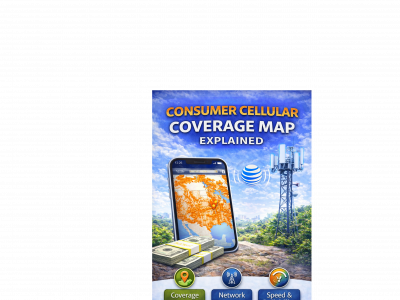
Consumer Cellular Coverage Map Explained

When choosing a mobile phone provider, coverage is one of the most important factors to consider. Even the most affordable phone plan is not useful if the signal is weak or unreliable in your area. This is why many customers look at the Consumer Cellular coverage map before deciding to switch their mobile service.
Consumer Cellular has become a popular wireless provider in the United States, especially among seniors and budget-conscious users. The company focuses on providing simple phone plans with affordable pricing while still maintaining dependable nationwide coverage.
Understanding how the Consumer Cellular network operates can help you determine whether it will work well in your location.
Coverage Areas
Consumer Cellular offers broad coverage throughout the United States. Most urban and suburban areas receive strong signal availability, allowing users to make calls, send messages, and access mobile data without major interruptions.
Because the service relies on large national network infrastructure, the Consumer Cellular coverage map shows that service is available across most states. Major cities, highways, and populated regions generally experience reliable connectivity.
However, coverage strength may vary depending on geography, population density, and local tower placement. Rural locations sometimes experience weaker signals, which is common with many wireless carriers.
Before switching providers, it is always helpful to check the official coverage map to confirm signal availability in your specific area.

Network Partners
Unlike major carriers that operate their own infrastructure, Consumer Cellular functions as a Mobile Virtual Network Operator (MVNO). This means the company uses the networks of larger telecommunications providers to deliver service to its customers.
Consumer Cellular primarily relies on the AT&T nationwide network for voice, text, and data coverage. By partnering with an established network provider, Consumer Cellular can offer reliable service without building its own cellular tower infrastructure.
This partnership allows customers to benefit from the same nationwide coverage used by millions of AT&T users. In many locations, customers experience similar signal strength and call quality as traditional network subscribers.
The use of a major network partner is one of the key reasons Consumer Cellular can provide dependable service while maintaining lower monthly pricing.

Speed and Reliability
Mobile data speed is another important factor when evaluating a wireless provider. Consumer Cellular offers 4G LTE and, in many areas, access to 5G networks through its partner infrastructure.
For everyday activities such as browsing websites, sending emails, watching videos, and using social media, the Consumer Cellular network generally performs well. Most users report stable connections for normal smartphone usage.
However, as with most MVNO services, network speeds can occasionally slow down during peak traffic periods. This happens because the main carrier’s direct customers may receive priority access to network bandwidth.
Despite this, many users still find the overall speed and reliability sufficient for daily communication and internet use.

Final Thoughts
The Consumer Cellular coverage map shows that the provider delivers strong nationwide coverage across most parts of the United States. By partnering with a major network infrastructure provider, Consumer Cellular offers reliable service while keeping monthly costs lower than many traditional carriers.
For customers who prioritize affordability, simplicity, and dependable service, Consumer Cellular remains a practical choice. Checking the coverage map and understanding how the Consumer Cellular network operates can help ensure that the service meets your communication needs.