 Mar 03, 2025 - 0
Minutes read
Mar 03, 2025 - 0
Minutes read
Consumer Cellular vs Verizon
Compare Consumer Cellular and Verizon to understand which mobile carrier offers the best value. This guide explores pricing differences, network coverage, and senior-friendly features to help you decide between a budget phone plan and a premium wireless service.
Consumer Cellular vs Verizon
Choosing the right mobile carrier in the United States often comes down to balancing cost, coverage, and features. Two well-known providers frequently compared are Consumer Cellular and Verizon. While both companies offer reliable mobile services, they target different types of users.
Consumer Cellular focuses on affordability and simplicity, making it especially popular among seniors and budget-conscious customers. Verizon, on the other hand, is considered a premium carrier known for advanced network performance, high-speed data, and additional service perks.
Understanding the differences between these providers can help you determine which option best fits your needs.
Pricing Comparison
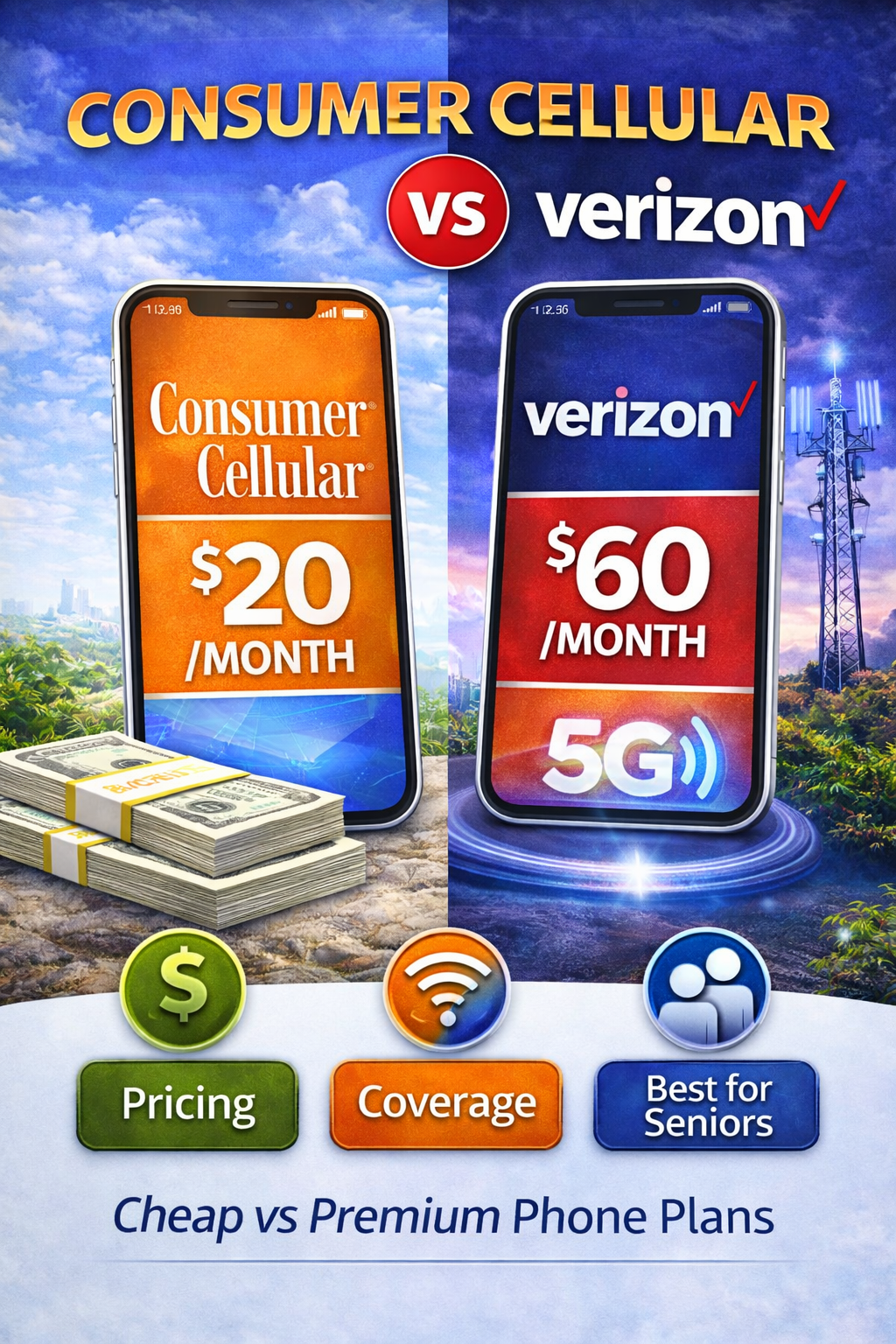
One of the biggest differences between Consumer Cellular and Verizon is pricing. Consumer Cellular is widely known for offering budget-friendly plans. Basic plans can start around $20 per month, making them one of the most affordable mobile options available in the United States.
These plans are designed for users who mainly need talk, text, and moderate data usage. Seniors and light smartphone users often prefer these flexible plans because they can adjust their data level whenever needed.
Verizon plans, by comparison, are generally more expensive. Entry-level Verizon plans typically start around $35 or more per month, while unlimited plans can reach $55–$70 depending on features and add-ons.
However, Verizon often includes extra benefits such as high-speed 5G access, hotspot data, and streaming service bundles.
In short, if saving money is the main goal, Consumer Cellular usually offers the better deal.
Network Coverage
Coverage is another important factor when comparing cheap vs premium phone plans.
Consumer Cellular operates as a mobile virtual network operator (MVNO), meaning it uses the infrastructure of larger networks rather than maintaining its own towers. Most Consumer Cellular service runs on the AT&T nationwide network, which provides coverage to more than 99% of Americans.
Because it uses a major network, coverage is generally reliable in cities and suburban areas. However, speeds may occasionally be slower during heavy network traffic since priority is often given to the main carrier’s direct customers.
Verizon, in contrast, operates its own nationwide network. It is well known for strong coverage and fast 5G speeds across many parts of the United States, particularly in rural regions.
This makes Verizon attractive for users who rely heavily on mobile data or need the strongest possible signal.

Best for Seniors
When it comes to senior-friendly mobile plans, Consumer Cellular often stands out as a top choice. The company is known for simple pricing, no long-term contracts, and flexible data options. Many seniors appreciate the ability to adjust their plans at any time without penalties.
Consumer Cellular also offers phones designed specifically for older adults, including devices with larger buttons, clearer screens, and simplified menus.
Verizon also provides senior plans in certain regions, such as 55+ discounts, but the overall pricing is usually higher than budget carriers.
For seniors who prioritize simplicity and affordability, Consumer Cellular is often the more practical choice.
Final Thoughts
Both Consumer Cellular and Verizon are reliable mobile carriers, but they serve different audiences. Consumer Cellular is ideal for users who want affordable, flexible phone plans without unnecessary features. Verizon, meanwhile, is better suited for customers who want premium network performance, faster data speeds, and extra perks.
If your priority is saving money and having an easy-to-manage plan, Consumer Cellular may be the best option. If you need top-tier network performance and advanced features, Verizon could be worth the higher price.