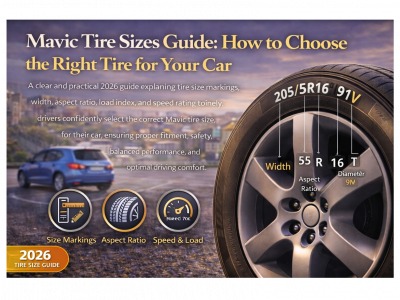
Every tire has a series of numbers and letters printed on its sidewall. For example: 205/55R16 91V. While it may look complicated, each part has a meaning.
205 refers to the tire width in millimeters.
55 is the aspect ratio, meaning the sidewall height is 55% of the tire’s width.
R stands for radial construction.
16 indicates the wheel diameter in inches.
91V represents load index and speed rating.
Understanding these numbers is essential when selecting the correct tire size for car replacement.

Why the Correct Tire Size Matters
Using the manufacturer-recommended size ensures proper handling and braking. Installing a tire that is too wide or too tall can cause rubbing issues, inaccurate speedometer readings, and reduced fuel efficiency. On the other hand, a smaller tire may lower stability and compromise safety.
Mavic designs its tires according to industry standards, so matching your vehicle’s factory specifications is always the safest choice.
How to Choose Tire Size for Your Vehicle
The easiest way to determine the correct tire size for car replacement is to check three places:
The sidewall of your current tires
The sticker inside the driver’s door frame
Your vehicle owner’s manual
These sources provide the recommended size approved by the manufacturer.
If you are considering changing wheel size for styling purposes, consult a professional before making adjustments. Even small changes can affect suspension geometry and braking performance.

Standard vs Alternative Sizes
Some drivers choose plus-sizing or minus-sizing options. For example, increasing wheel diameter while lowering sidewall height. While this can improve appearance and cornering feel, it may reduce ride comfort and increase cost.
If you are unsure, sticking with the original equipment size is usually the best approach for daily driving.
Choosing the Right Mavic Tire Model
Once you confirm the correct size, the next step is selecting the right Mavic model based on your driving needs:
For city commuting, choose comfort-focused all-season models.
For highway travel, look for stability and low-noise designs.
For wet climates, prioritize enhanced tread patterns for water evacuation.
Your tire size must match your wheel, but the tread design should match your driving style.
Final Thoughts
Selecting the correct tire size for car safety is not complicated once you understand the numbers. This Mavic tire size guide helps simplify the process for new buyers who feel confused about sizing.